.png)
Universe
More details
-
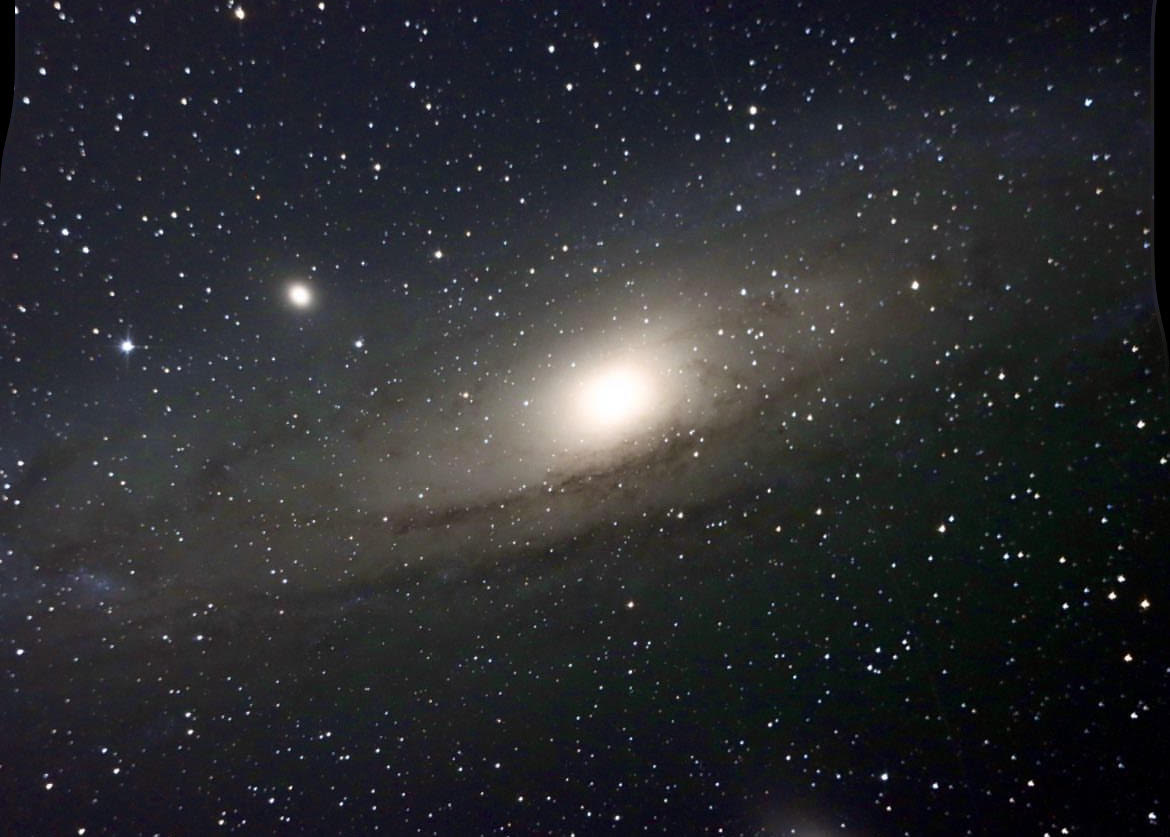
m31 - Also known as the Andromeda Galaxy, is the nearest spiral galaxy to the Milky Way and the largest galaxy in the Local Group.
Located approximately 2.5 million light-years from Earth, it can be seen with the naked eye from dark locations.
Andromeda is a massive galaxy, containing over one trillion stars, and is on a slow collision course with our Milky Way, expected to merge in about 4.5 billion years. Its bright core and sweeping spiral arms make it a favorite target for astrophotography and amateur astronomers alike. -
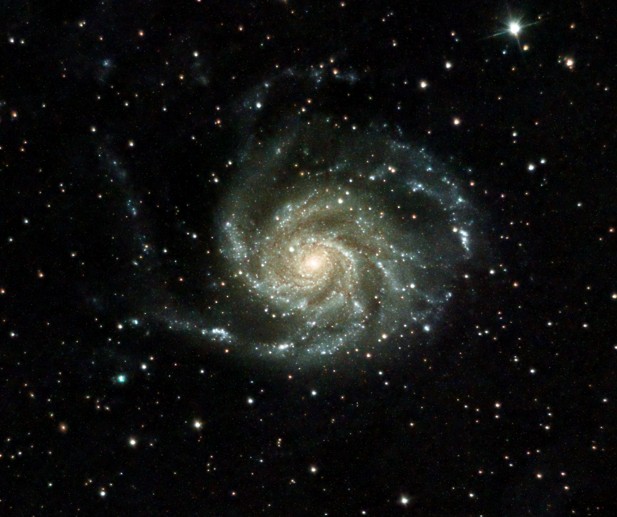
m101 - Also known as the Pinwheel Galaxy, is a stunning face-on spiral galaxy located about 21 million light-years away in the constellation Ursa Major. It is characterized by its grand design spiral arms, bright star-forming regions, and a rich population of young, hot stars. With a diameter of over 170,000 light-years, it is larger than our Milky Way and offers a spectacular target for astrophotography, revealing intricate patterns of gas, dust, and star clusters.
-
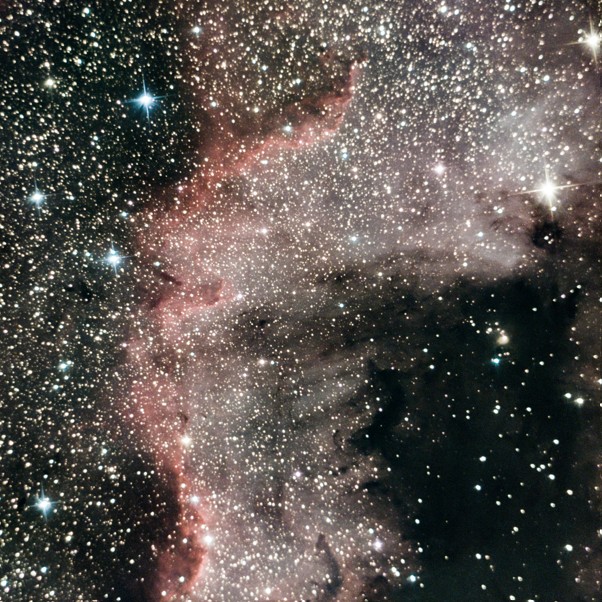
ngc7000 - Commonly known as the North America Nebula, is a large emission nebula located in the constellation Cygnus, about 2,600 light-years away. Its glowing hydrogen gas forms a shape reminiscent of the North American continent, giving the nebula its nickname. Although faint and often requiring long exposure astrophotography to capture in full detail, NGC 7000 is a favorite target for amateur astronomers due to its striking structure and rich star-forming regions.
-
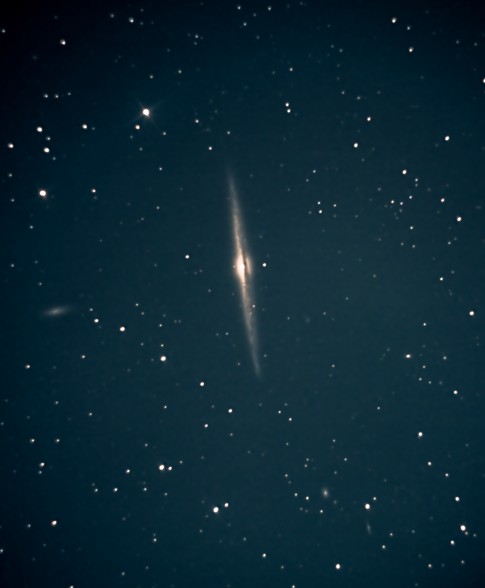
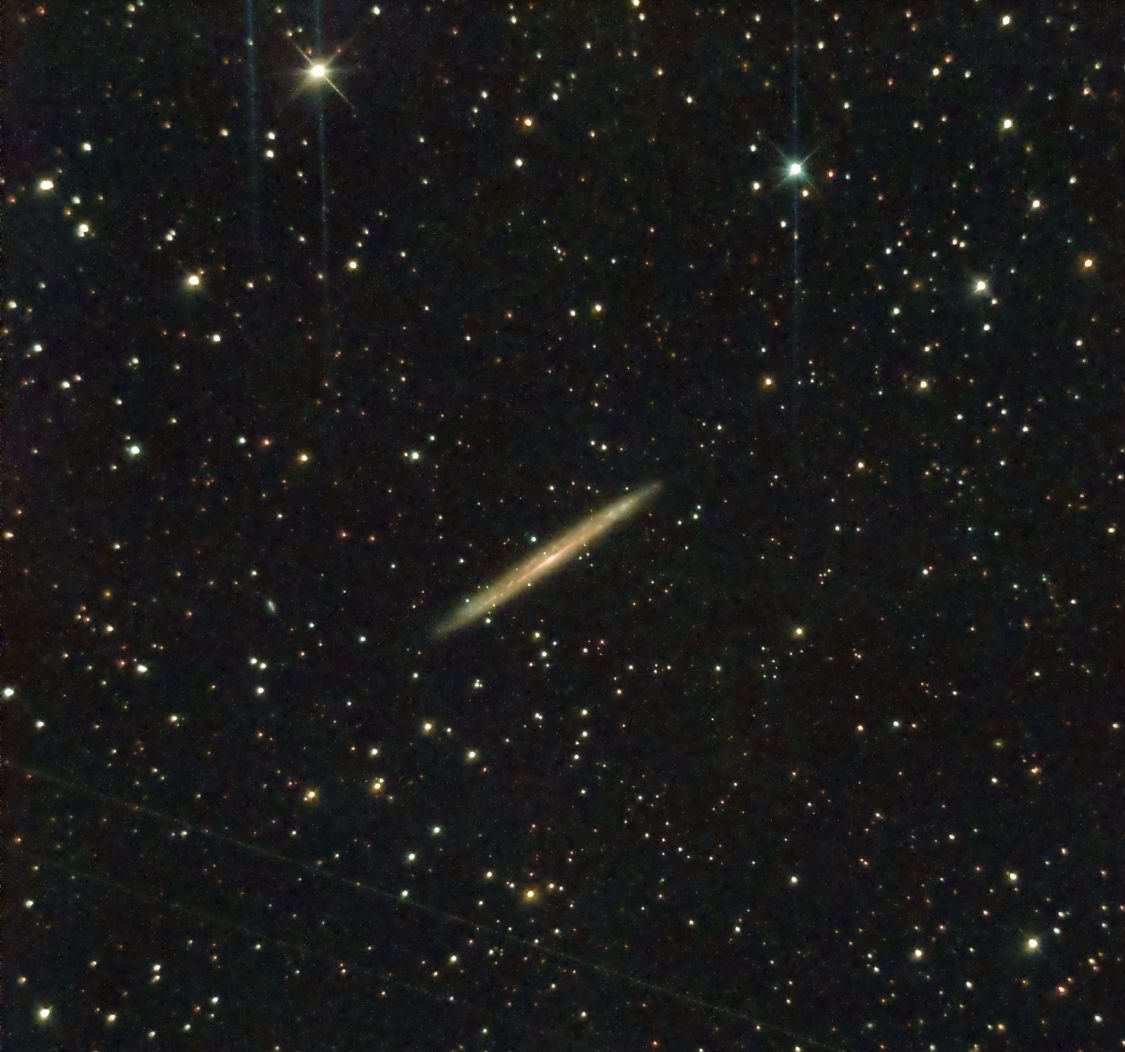
ngc4565 - Also known as the Needle Galaxy, is a stunning edge-on spiral galaxy located in the constellation Coma Berenices, approximately 30 to 50 million light-years away. Its slim, elongated profile gives it the nickname “Needle Galaxy,” making it a striking target for astrophotography. NGC 4565 features a bright central bulge and a thin disk of stars, dust, and gas, providing a beautiful example of a spiral galaxy viewed from the side.
-
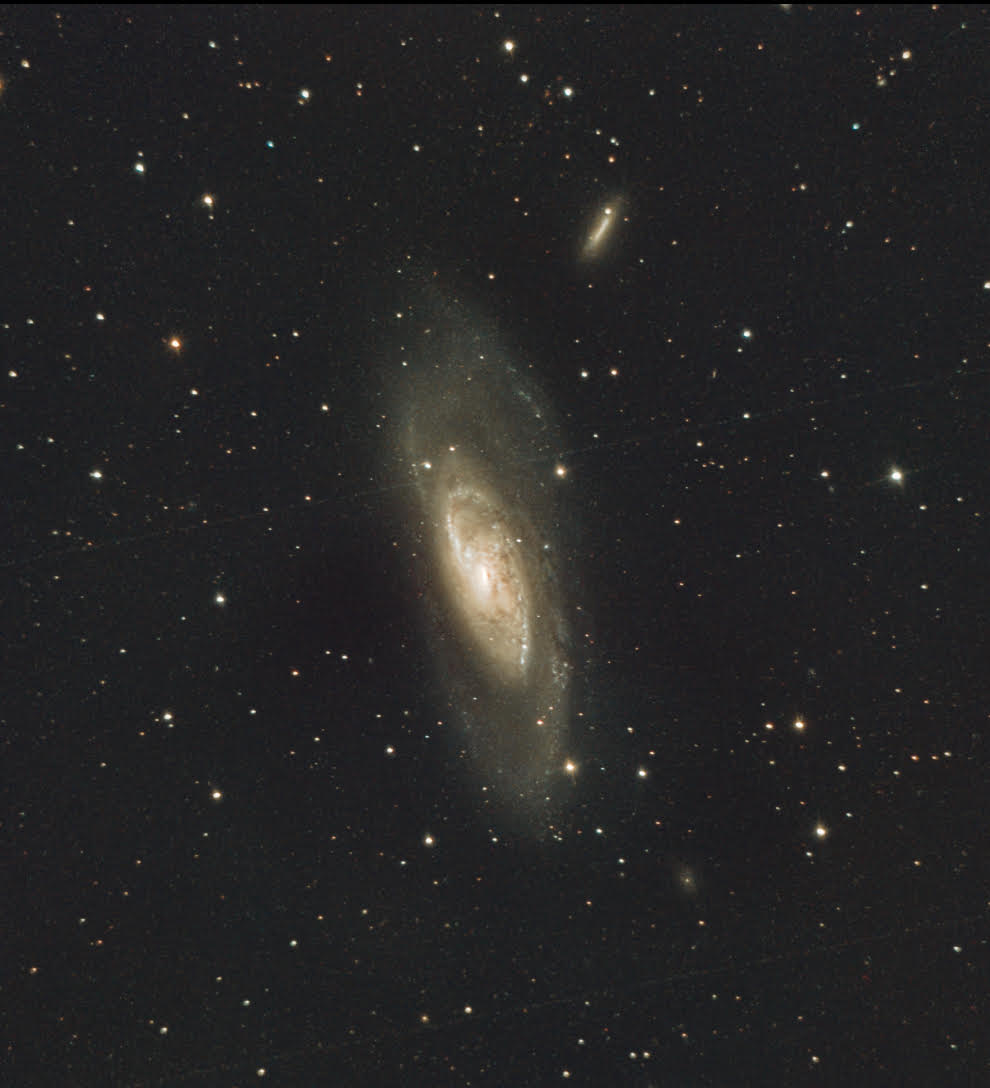
m106 - Also known as the Canes Venatici Galaxy, is a spiral galaxy located about 22 to 25 million light-years away in the constellation Canes Venatici. It is slightly inclined, allowing us to see both its spiral arms and bright central region. M106 is notable for its active nucleus, which emits strong radio waves and X-rays, and for its prominent star-forming regions. Its combination of bright core, spiral structure, and rich hydrogen clouds makes it a favorite target for astrophotography and amateur astronomers alike.
-
ngc5907 - Also known as the Splendid Spiral Galaxy or Splinter Galaxy, is a thin edge-on spiral galaxy located in the constellation Draco, about 50 million light-years away. Its extremely slender profile and delicate disk make it appear almost like a needle or splinter in the night sky. NGC 5907 features a faint but extended halo of stars and a prominent dark dust lane, making it an attractive target for deep-sky astrophotography and for studying the structure of spiral galaxies from the side.